An unexpected water leak changed how I thought about owning a home.
We were dealing with serious damage and trying to make decisions quickly. My instinct was to turn off the water, but I wasn’t certain which step to take first. Then came the calls, the assessments, and the question I kept coming back to: how do I know whether I’m being given the right advice?
We didn’t have enough plumbing knowledge to confidently evaluate the explanations or prices. That uncertainty was frustrating. I couldn’t tell whether the proposed work was necessary, whether the price made sense, or what questions I should even be asking.
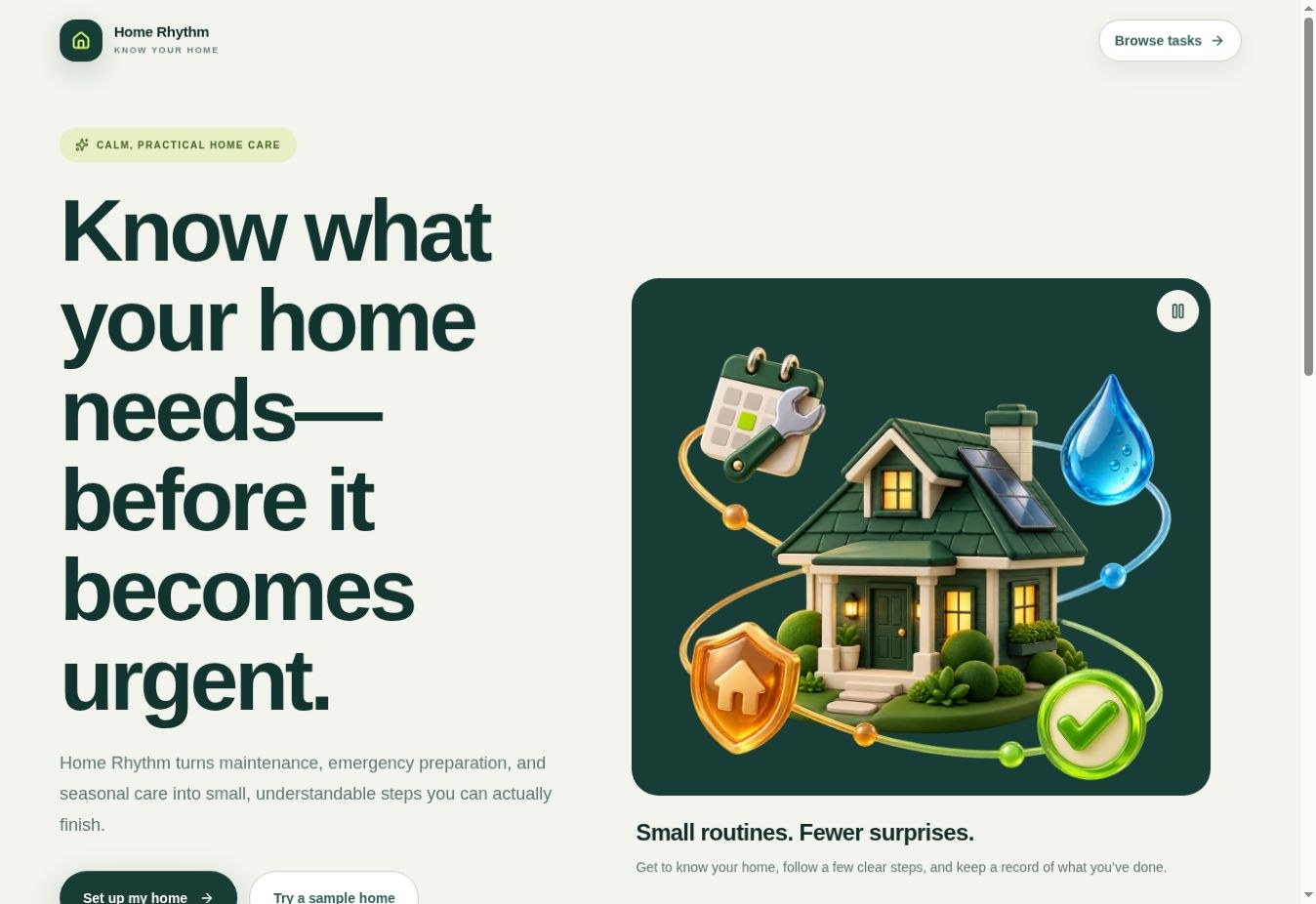
That experience became the reason I built Home Rhythm: a home-care app for everyday people who want to feel more prepared and better understand the place they live.
The problem was bigger than a maintenance reminder
A checklist can remind you to look under the sink. But when water is coming through the ceiling, you need a different kind of help. You need to think about safety, understand who to call, document what happened, and make decisions while you’re stressed.
The same uncertainty can show up when the AC stops cooling, the power goes out, or a storm damages the house. Most people don’t spend their spare time learning how every home system works. I wanted a starting point that makes those unfamiliar moments easier to navigate.
The goal isn’t to turn everyone into a plumber or electrician. It’s to help people recognize what they know, what they don’t, and where qualified help belongs.
Before a problem: get to know your home
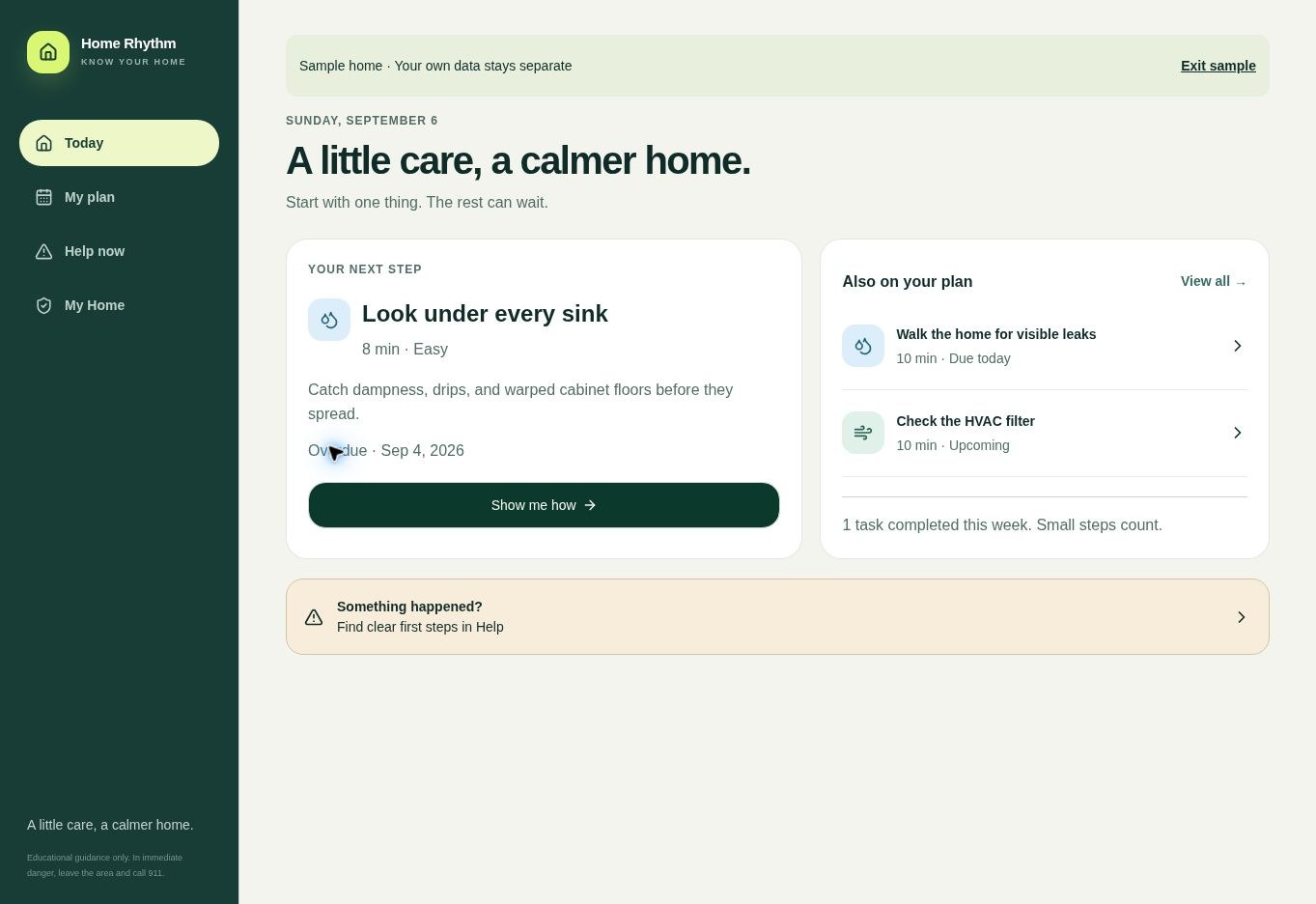
Home Rhythm starts with a few simple setup questions about the home and the equipment you maintain. “Not sure” is a valid answer. You can learn as you go instead of having to pretend you already know everything.
From there, the app offers maintenance suggestions and step-by-step tasks. You can choose dates, record completed care, and return to your history. The My Home area gives you a place to note the water shutoff, electrical panel, and trusted service contacts.
During a problem: find a clearer next step
The Help section begins with situations people recognize: a water leak, an AC that isn’t cooling, a power outage, a gas smell, or storm damage. Each guide starts with safety, then walks through useful observations and appropriate calls.
Once the immediate danger is handled, there are questions to bring into a conversation with a professional. What evidence supports the diagnosis? What needs attention now? What can safely wait? Can the scope and fees be explained in a written estimate?
I don’t want the app to encourage suspicion of every professional. A price alone doesn’t tell the whole story. I want homeowners to feel comfortable asking for explanations and making informed decisions about the work they approve.
After damage: insurance is part of the picture
Fixing the source is only part of recovering from damage. There are records to keep, conversations with an insurer, and questions about what protection you actually have.
Home Rhythm includes a coverage-review checklist, prompts for an insurance call, and a place to save recovery notes. It helps you organize questions about deductibles, different kinds of water damage, temporary living expenses, and any lender involvement with a claim check.
Checking a topic off means you reviewed it. It does not mean the app has confirmed you are covered. The guidance points to insurance-regulator resources and encourages you to get answers specific to your policy from your agent or insurer.
What building it has taught me
I’ve been developing and refining Home Rhythm with Codex. The most useful feedback has come from opening it on my phone and asking whether a person unfamiliar with home maintenance would know what to do next.
The important design choice is giving people a clear starting point. Someone dealing with an unfamiliar home problem should be able to find practical guidance without learning a complicated tool first.
The project keeps reminding me that an app can have working features and still leave people confused. The work is connecting those features into a path that makes sense: prepare, take a useful next step, record what happened, and return when you need it.
Try Home Rhythm
You can explore a sample home before entering anything of your own, or start with your home’s setup. No account is required. Your progress stays in the browser you use, with a backup export available. Photos, receipts, and policy documents stay in your own secure storage.
This is a working app I’m continuing to improve. It provides educational guidance, not emergency response, professional diagnosis, or insurance coverage decisions. The purpose is to help you feel more prepared to ask questions and take the right next step.
Try Home Rhythm ↗
Explore my other projects →
If you’ve had a home problem that left you thinking, “I wish I’d known what to do,” I’d like to hear about it.