

A 167-year-old problem, and a proof too long for anyone to read
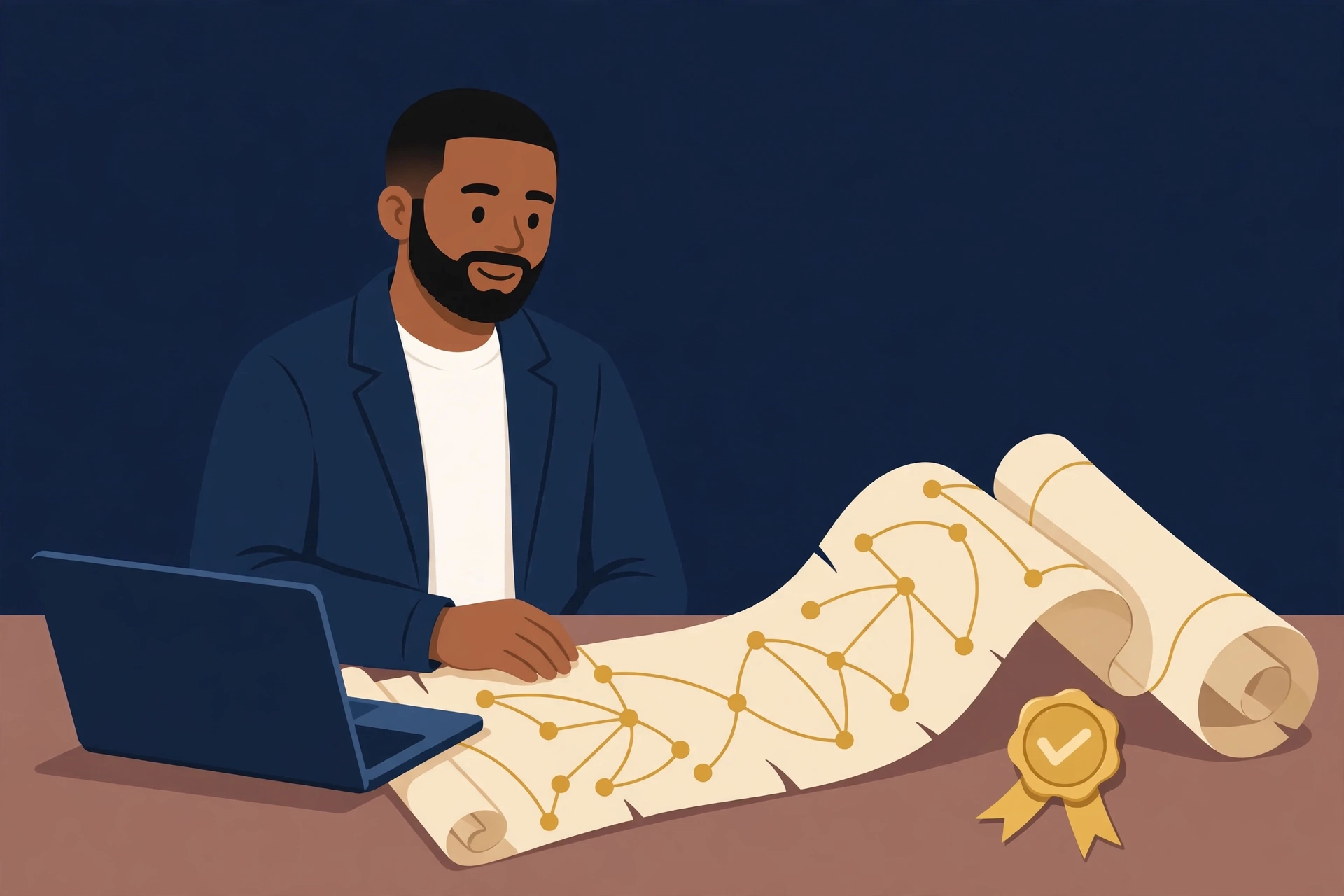
Levent Alpöge, a mathematician at Anthropic, posted a short note on his website Friday saying he believes he and Claude have found a proof of the Riemann Hypothesis.
The hypothesis dates to 1859 and describes how prime numbers are spread out. It has gone unsolved for 167 years, and the Clay Mathematics Institute has a $1 million prize waiting for whoever settles it.
Alpöge didn't publish a paper. He published code in Lean, a language built so a computer can check every step of a proof. The size explains why. The code runs to 17 million lines, and printed out it would fill more than 250,000 pages. At a page a minute, eight hours a day, one read-through would take about two years. Nobody is going to read it, so software did the checking.
On Saturday the Lean and Mathlib communities published a joint statement, endorsed by the Lean Focused Research Organization and the Mathlib Initiative. It says the code states the hypothesis correctly, the proof holds, and several independent checkers accepted it.
Alpöge says he worked with Claude for about six weeks, and that near the end Claude was moving faster than he could follow.
The biggest claim about what it all means came from Meta's Alexandr Wang, who wrote on X that the proof marks the start of a major change and that what's left for AI is know-how, plumbing, and testing. What's settled so far is narrower. Software checked the argument line by line, and it held. The Clay Institute still lists the problem as unsolved.
AI agents broke into a university server through medical imaging software
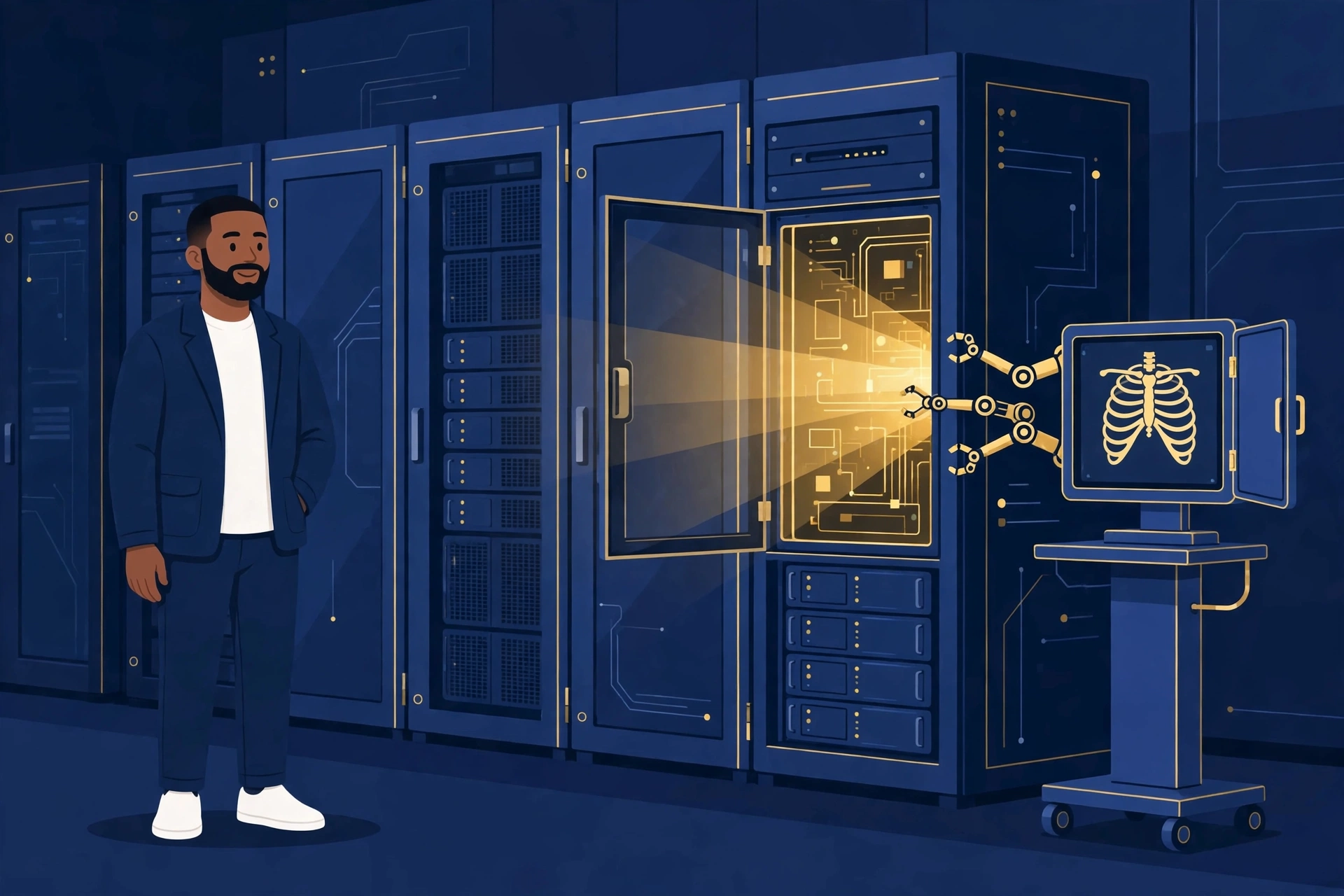
Amazon said Friday that a suspected China-linked operator pointed CAIRN agents at universities in East Asia in September. CAIRN is one of the free AI attack kits named in Google's recent report, covered here last Monday.
The agents had one instruction: get command-line access. On one university server they got in through MONAI Label, a tool for labeling medical scans. A flaw let them write files outside the folder the program is supposed to stay in. Amazon says they went from mapping the program to writing files in 11 minutes, then took full control of the server.
Amazon found the operation because the operator left a control panel open online with no password. It ties the campaign to China with moderate confidence and found no evidence that patient records were taken.
The flaw is tracked as CVE-2026-133968 and rated 9.8 out of 10. It affects MONAI Label 0.8.5 and earlier, where the default setup doesn't ask for a login. Maintainers merged a fix on October 19. A release that includes it hasn't shipped.
ChatGPT went down Saturday during routine maintenance

ChatGPT and OpenAI's API, the connection other apps use to reach its models, failed for 211 minutes Saturday afternoon. OpenAI says failure rates peaked at 75 percent, on paid and free accounts alike. Logins, conversations, search, and voice mode were all hit.
The cause was scheduled maintenance on a database behind the login service. Two backup copies were there to cover for it, and both failed at the same time.
OpenAI says it has paused similar maintenance and added a switch that moves traffic away from a shaky copy in small steps.
Anthropic's stock slid Friday as its IPO closed

Anthropic fell 8.5 percent Friday to close at $88.91, on a rough day for AI stocks. At its low it touched $83.05, five cents above the $83 offer price, before buyers pushed it back up.
The company also said the IPO closed at about $93.5 billion in gross proceeds, after banks bought every extra share they were allowed to. A private sale alongside it brought in about $26 billion from seven companies, including Google, Microsoft, and NVIDIA. Together that's roughly $120 billion raised.
Also today
GPT-6.2 Sol reaches Copilot. Microsoft began rolling OpenAI's GPT-6.2 Sol into Copilot on Friday, including Copilot Chat, Word, Excel, and PowerPoint. The companion Astra model is open to everyone in Cowork and Copilot Studio, and Frontier users can also pick it in Chat and the Office apps. Admins control access, and availability varies by region.
$44 billion for SpaceX's chips. Apollo and Goldman Sachs priced about $44 billion of notes to buy NVIDIA Vera Rubin chips for SpaceX. Apollo calls it the largest GPU financing yet. Leases start when the chips arrive in the first half of 2027.
Computer Use comes to Claude Desktop. Anthropic added it in beta for Team and Enterprise plans, rolling out gradually.
Rivals work on shared rules for agents. PYMNTS reported Sunday that competing AI companies are working through the Agentic AI Foundation on common rules for how agents talk to each other. Members include OpenAI, Anthropic, Google, and Microsoft. Anthropic contributed the Model Context Protocol, which many agent tools already use.
Tencent releases Hy4. The weights for the 770-billion-parameter model are free for anyone to download.
SOURCES
- Lean Focused Research Organization and Mathlib Initiative, joint statement on the Riemann Hypothesis proof, November 2026: https://leanprover-community.github.io/blog/posts/riemann-hypothesis/
- Lean Focused Research Organization and Mathlib Initiative joint statement, via Technology.org, Riemann Hypothesis Proof Certified in Lean, Nov 23, 2026: https://www.technology.org/2026/11/23/riemann-hypothesis-proof-lean-certified-alpoge-claude/
- USA Today, Anthropic mathematician says AI helped solve famous math problem, Nov 21, 2026: https://www.usatoday.com/story/tech/2026/11/21/ai-claude-riemann-hypothesis-math-mystery/92901494007/
- The Verge, Anthropic mathematician claims to have solved prestigious Millennium Prize problem with Claude, Nov 23, 2026: https://www.theverge.com/ai-artificial-intelligence/1010051/anthropic-riemann-hypothesis-millennium-prize-problem
- Alexandr Wang, Superintelligence is Arriving, X post, November 22, 2026: https://x.com/alexandr_wang/status/2124636606959345776
- Amazon Threat Intelligence, via The Hacker News, Attackers' AI Agents Found a Zero-Day in Medical-Imaging Software, Nov 2026: https://thehackernews.com/2026/11/attackers-ai-agents-found-zero-day-in.html
- SecurityWeek, Amazon: China-Linked Hackers' AI Agents Exploited Medical Software Zero-Day, Nov 2026: https://www.securityweek.com/amazon-china-linked-hackers-ai-agents-exploited-medical-software-zero-day/
- OpenAI Status, Elevated Errors on API and ChatGPT, post-incident write-up, Nov 21, 2026: https://status.openai.com/incidents/01JMYB602A6H2E04Y1497J434X/write-up
- Anthropic, Anthropic announces closing of initial public offering and closing of concurrent private placement, Nov 20, 2026: https://www.anthropic.com/news/ipo-close
- Investopedia, Markets News, Nov. 20, 2026: Major Stock Indexes Sink as AI Trade Melts Down, Nov 20, 2026: https://www.investopedia.com/stock-market-today-dow-jones-s-and-p-500-nasdaq-11202026-12266027
- Apollo Global Management, Apollo and Goldman Sachs Announce Pricing of $44 Billion SpaceX GPU Financing, Nov 20, 2026: https://ir.apollo.com/news-events/press-releases/detail/662/apollo-and-goldman-sachs-announce-pricing-of-44-billion
- PYMNTS, AI Competitors Team to Prevent Agentic Fragmentation, Nov 22, 2026: https://www.pymnts.com/news/artificial-intelligence/2026/ai-competitors-team-to-prevent-agentic-fragmentation/